December 31, 2017
Internet connection problems prevented me from posting the last two days of my 2017 Mexican artist blog...
Happy Birthday Hermes Arroyo!
Born on New Year's Eve, December 31, 1970, in San Miguel Allende. He became interested in crafts in school when a classmate brought some handmade nativity figures by his father to show at school. He apprenticed with the father, Antonio Amanza and then attended Centro Cultural El Nigromante.
Arroyo is known best for his large paper mache puppets or "mojigangas". The characteers are worn by dancers in festivals and processions. They were originally religious in nature but today they are primarily historical, pop culture or bride and groom figures. Although he did not invent these figures, he has become known as the artist responsible for their making, popularity, and preservation. He has received many commissions for his work and has exhibitd numerous times. Arroyo has taught handcrafts at summer camps and other venues and has worked with special needs students for over 20 years.
Due to the recent presidential election and resultant political situation in the USA, I find myself living at least part time in Mexico for the next four years. My previous blogs have focused on famous artists in general...Van Gogh's Ear 3 is an indepth look at Mexican artists on their birthday. A post will be made each day about a famous Mexican artist, his/her art, interesting facts, personal experiences, etc. on their birthday. So, lend me your ear...
Tuesday, January 9, 2018
Friday, December 29, 2017
David Alfaro Sisquieros
Happy Birthday David Alfaro Sisquieros!
One of the major proponents of the Mexican muralist movement (along with Diego Rivera and Jose Clemente Orozco), David Alfaro Sisquieros was born on December 29, 1896, in Chihuahua. He was a social realist painter best known for his large murals. Sisquieros was rebellious beginning in his youth and continuing with his involvement in various uprisings into his adulthood with his involvement in the attempt on Leon Trotsky. Sisquieros used his art to depict the struggle of the working class and various social issues. He felt art should be public, educational and ideological. It has been noted that many of his murals feature "hands" signifying "strength through work".
He is known for creating the world's largest mural for the Hotel de la Selva, in Mexico City. To achieve this feat, Sisquieros gathered a group of artists, creating 21 panels in his studio to be installed. This was to be his last major mural accomplishment.
One of the major proponents of the Mexican muralist movement (along with Diego Rivera and Jose Clemente Orozco), David Alfaro Sisquieros was born on December 29, 1896, in Chihuahua. He was a social realist painter best known for his large murals. Sisquieros was rebellious beginning in his youth and continuing with his involvement in various uprisings into his adulthood with his involvement in the attempt on Leon Trotsky. Sisquieros used his art to depict the struggle of the working class and various social issues. He felt art should be public, educational and ideological. It has been noted that many of his murals feature "hands" signifying "strength through work".
He is known for creating the world's largest mural for the Hotel de la Selva, in Mexico City. To achieve this feat, Sisquieros gathered a group of artists, creating 21 panels in his studio to be installed. This was to be his last major mural accomplishment.
Thursday, December 28, 2017
Nicolas Moreno
Happy Birthday Nicolas Moreno!
Considered one of best landscape painter of his time, Nicolas Moreno was born on December 28, 1923, in |Mexico City. He was able to experience the Mexican countyside when his grandfather took him with him, while working as a muledriver. Surely these experiences helped influenced his later painting. Although the family was poor and he had to work to help support them, he did take classes at night at La Esmeralda. Moreno became a sketch artist, engraver, muralist, but most importantly a landscape painter.
His work has been exhibited all over the world in over 100 solo showings and numerous collective exhibits. His goal was to mainly document the varied landscape of Mexico, but in addition to point out the erosion and degradation of the countryside. Moreno attempted to paint his initial impression of the spot rather than enhancing with color or modifying it in any way. He taught landscape painting at several schools and has won awards for his own painting,
Considered one of best landscape painter of his time, Nicolas Moreno was born on December 28, 1923, in |Mexico City. He was able to experience the Mexican countyside when his grandfather took him with him, while working as a muledriver. Surely these experiences helped influenced his later painting. Although the family was poor and he had to work to help support them, he did take classes at night at La Esmeralda. Moreno became a sketch artist, engraver, muralist, but most importantly a landscape painter.
His work has been exhibited all over the world in over 100 solo showings and numerous collective exhibits. His goal was to mainly document the varied landscape of Mexico, but in addition to point out the erosion and degradation of the countryside. Moreno attempted to paint his initial impression of the spot rather than enhancing with color or modifying it in any way. He taught landscape painting at several schools and has won awards for his own painting,
Wednesday, December 27, 2017
Francisco Zuniya
Happy Birthday Francisco Zuniya!
Born on December 27, 1912, Jose Jesus Francisco Zuniya Chavarria was a Costa Rican born painter and sculptor. His parents were both sculptors and he began learning from them at an early age, even working in his father's workshop. For a short time attended Escuela de Bellas Artes and then continued his study of German Expressionism and French sculptors, Aristide Maillol and Auguste Rodin on his own.
At just age 17, Zuniga began receiving recognition of his painting and sculpture, winning awards in Costa Rica and Mexico. He also taught at La Esmeralda and became a Mexican citizen in 1986, after living in the country for 50 years.
-
Zuniga is considered perhaps the most important sculptor of the "Mexican political style". Pre-Hispanic work was a strong influence and traditional women represented maternity and family for the artist. His work is held in many public collections all over the world. Zuniga created over 35 public works. When he went blind toward the end of his life he began sculpting in terracotta.
Born on December 27, 1912, Jose Jesus Francisco Zuniya Chavarria was a Costa Rican born painter and sculptor. His parents were both sculptors and he began learning from them at an early age, even working in his father's workshop. For a short time attended Escuela de Bellas Artes and then continued his study of German Expressionism and French sculptors, Aristide Maillol and Auguste Rodin on his own.
At just age 17, Zuniga began receiving recognition of his painting and sculpture, winning awards in Costa Rica and Mexico. He also taught at La Esmeralda and became a Mexican citizen in 1986, after living in the country for 50 years.
-
Zuniga is considered perhaps the most important sculptor of the "Mexican political style". Pre-Hispanic work was a strong influence and traditional women represented maternity and family for the artist. His work is held in many public collections all over the world. Zuniga created over 35 public works. When he went blind toward the end of his life he began sculpting in terracotta.
Crouching Nude
Tuesday, December 26, 2017
Alexander Canedo
Happy Birthday Alexander Canedo!
Surrealist magic realism artist, Alejandro de Canedo (later Anglicizing his name), was born on December 26, 1902, in Mexico City, to Mexican father and American mother. When he was 15, he went to Paris and studied at Ecoles Nationale Supereiure des Beaux-Arts with sculptor Jean Magrou. He alo studied in Rome and had his first exhibit of pencil drawings there.
Canedo was commissioned to create several illustrations for books. He worked in watercolors and oils as well, placing his figures and objects in alien landscapes and unlikely settings. He relocated to California permanently and his work was exhibited exensively in the US.
Surrealist magic realism artist, Alejandro de Canedo (later Anglicizing his name), was born on December 26, 1902, in Mexico City, to Mexican father and American mother. When he was 15, he went to Paris and studied at Ecoles Nationale Supereiure des Beaux-Arts with sculptor Jean Magrou. He alo studied in Rome and had his first exhibit of pencil drawings there.
Canedo was commissioned to create several illustrations for books. He worked in watercolors and oils as well, placing his figures and objects in alien landscapes and unlikely settings. He relocated to California permanently and his work was exhibited exensively in the US.
Monday, December 25, 2017
Benjamin Peret
Merry Christmas!
Happy Birthday Benjamin Peret!
Today I am writing about Surrealist poet Benjain Peret, even though he was not a visual artist, his poetry served as inspiration and muse to many Surrealist artists, including Remedios Varo (see post). He was born on July 4, 1898, in Paris.
Peret began his writing career as a proofreader for newspapers. He was an activist and after being expelled from Brazil he retuned to Europe, where he met artist Remedios Varo, in Barcelona.. The couple first relocated to Paris and finally exiled to Mexico after the German occupation of France. Peret was an important influence in Latin American art, both visual as well as written. Many of his works have been translated to Spanish.
Little Song for the Maimed
Lend me your arm
To replace my leg
The rats ate it for me
At Verdun
At Verdun
I ate alot of rats
But they didn't give me back my leg
And that's why I was given the Croix de Guerre
And a wooden leg
And a wooden leg
Happy Birthday Benjamin Peret!
Today I am writing about Surrealist poet Benjain Peret, even though he was not a visual artist, his poetry served as inspiration and muse to many Surrealist artists, including Remedios Varo (see post). He was born on July 4, 1898, in Paris.
Peret began his writing career as a proofreader for newspapers. He was an activist and after being expelled from Brazil he retuned to Europe, where he met artist Remedios Varo, in Barcelona.. The couple first relocated to Paris and finally exiled to Mexico after the German occupation of France. Peret was an important influence in Latin American art, both visual as well as written. Many of his works have been translated to Spanish.
Little Song for the Maimed
Lend me your arm
To replace my leg
The rats ate it for me
At Verdun
At Verdun
I ate alot of rats
But they didn't give me back my leg
And that's why I was given the Croix de Guerre
And a wooden leg
And a wooden leg
Sunday, December 24, 2017
Manuel Echauri
Happy Birthday Manuel Eschauri!
Manuel Echauri was born on Christmas, 1922, in Mexico City. He studied painting, first at Escuela de Pintor al Aire Libre, in Tlalpan, then at Academy de San Carlos. In addition to his artistic w,orks Echauri was also a teacher and founding member of the Salon de la Plastica Mexicana.
Echauri was married twice and his first wife was also an artist, Esperanza Munoz Hoffmann. Echauri died at the age of 87, from liver cancer.
Manuel Echauri was born on Christmas, 1922, in Mexico City. He studied painting, first at Escuela de Pintor al Aire Libre, in Tlalpan, then at Academy de San Carlos. In addition to his artistic w,orks Echauri was also a teacher and founding member of the Salon de la Plastica Mexicana.
Echauri was married twice and his first wife was also an artist, Esperanza Munoz Hoffmann. Echauri died at the age of 87, from liver cancer.
Woman at the Table (engraving)
Saturday, December 23, 2017
Ignacio Aguirre
Happy Birthday Ignacio Aguirre!
Born on December 23, 1900, in San Sebastian, Jalisco, Ignacio Aguirre was a painter and engraver. After fighting in the revolution, working in the mines, and participating the uprising in favor of Alvaro Obregon, Aguirre studied painting. He went on to work as a scenographer and taught drawing and painting. He helped found various organizations such as Liga de Escritorios y Artistas Revolucionarios and Taller de Grafica Popular.
Aguirre used engraving to promote his political messages. He also painted landscapes and rural folk scenes. In addition to painting, he also created watercolors, drawings, woodcuts and designed tapestries. He exhibited in New York, Europe,and of course, Mexico.
Born on December 23, 1900, in San Sebastian, Jalisco, Ignacio Aguirre was a painter and engraver. After fighting in the revolution, working in the mines, and participating the uprising in favor of Alvaro Obregon, Aguirre studied painting. He went on to work as a scenographer and taught drawing and painting. He helped found various organizations such as Liga de Escritorios y Artistas Revolucionarios and Taller de Grafica Popular.
Aguirre used engraving to promote his political messages. He also painted landscapes and rural folk scenes. In addition to painting, he also created watercolors, drawings, woodcuts and designed tapestries. He exhibited in New York, Europe,and of course, Mexico.
Tren Revolucionario
Friday, December 22, 2017
Salvador Vazquez Carmona
Happy Birthday Salvador Vazquez Carmona!
The Mexican potter, Salvador Vazquez Carmona was born on December 23, 1933, in Tonala, Jalisco. He is known for his style of "brunido", the pottery of the region, which he first learned from his mother when he was 6 years old. Jorge Wilmot was his mentor later, but Carmona's style differed from that of Wilmot.
"Brunido" is a burnishing process used to finish ceramic wares. The clay is very fine, similar to porcelain and the pieces are not fired, but polished to a sheen. One type of brunido is called "canelo" due to the cinnamon color of the clay (canela means cinnamon in Spanish). Animal and bird shapes are traditionally created and not usually used for food or water since the clay is too porous.
Carmona uses traditional as well as his own unique shapes and designs for the lamps, large flower vases, platters and water jugs he makes. Often the animals appear Surrealistic due to the distortions of the characterisics. His work has been exhibited and in various contests where Carmona has won numerous prizes.
The Mexican potter, Salvador Vazquez Carmona was born on December 23, 1933, in Tonala, Jalisco. He is known for his style of "brunido", the pottery of the region, which he first learned from his mother when he was 6 years old. Jorge Wilmot was his mentor later, but Carmona's style differed from that of Wilmot.
"Brunido" is a burnishing process used to finish ceramic wares. The clay is very fine, similar to porcelain and the pieces are not fired, but polished to a sheen. One type of brunido is called "canelo" due to the cinnamon color of the clay (canela means cinnamon in Spanish). Animal and bird shapes are traditionally created and not usually used for food or water since the clay is too porous.
Carmona uses traditional as well as his own unique shapes and designs for the lamps, large flower vases, platters and water jugs he makes. Often the animals appear Surrealistic due to the distortions of the characterisics. His work has been exhibited and in various contests where Carmona has won numerous prizes.
Thursday, December 21, 2017
Mauricio Garcia Vega
Happy Birthday Mauricio Garcia Vega!
December 21, 1911, was the birthday of Mexican painter Mauricio Garcia Vega. He began his art study in Barcelona, Spain, then attended Escuela Libre de Arte y Publicidad in Mexico, studying illustration and lithography. His brother, Antonio Garcia Vega is also an artist and the two have collaborated on projects.
Vega's work is often about violence and human decadence, containing distorted chaotic urban landscapes, evoking terror and drama. In addition to painting, he has created sculptures. He was influenced by the German Expressionists and Goya's "Black Paintings". Vega has had numerous solo and collective exhibitions and won awards and prizes.
December 21, 1911, was the birthday of Mexican painter Mauricio Garcia Vega. He began his art study in Barcelona, Spain, then attended Escuela Libre de Arte y Publicidad in Mexico, studying illustration and lithography. His brother, Antonio Garcia Vega is also an artist and the two have collaborated on projects.
Vega's work is often about violence and human decadence, containing distorted chaotic urban landscapes, evoking terror and drama. In addition to painting, he has created sculptures. He was influenced by the German Expressionists and Goya's "Black Paintings". Vega has had numerous solo and collective exhibitions and won awards and prizes.
Wednesday, December 20, 2017
Mario Pani
Happy Birthday Mario Pani!
Mexican architect, Mario Pani, was born March 29, 1911, in Mexico City. He studied architecture and urban planning in France and at the National Autonomous University, in Mexico. Following his education, Pani went on to introduce the "international style" to Mexico. He became an important urban planner for Mexico City, helping develop plans for the 20th century.
In additio to his work in architecure, Pani also founded the National College of Achitects (1946) as well as the journal Achitectura Mexico. His son, Knut was also an artist. Pani lived to be 81 years of age, credited with envisioning the character and appearance of modern day's Mexico City.
Mexican architect, Mario Pani, was born March 29, 1911, in Mexico City. He studied architecture and urban planning in France and at the National Autonomous University, in Mexico. Following his education, Pani went on to introduce the "international style" to Mexico. He became an important urban planner for Mexico City, helping develop plans for the 20th century.
In additio to his work in architecure, Pani also founded the National College of Achitects (1946) as well as the journal Achitectura Mexico. His son, Knut was also an artist. Pani lived to be 81 years of age, credited with envisioning the character and appearance of modern day's Mexico City.
Tuesday, December 19, 2017
Jose Horna
Happy Birthday Jose Horna!
Born in 1912, Jose Horna was originally from Spain. He was educated at San Fernando Academy in Madrid. While working at Umbral magazinee met his wife artist Kati Horna. When the Spanish Civil War erupted, the couple fled to Paris where they worked together for the magazine Agence Photo. Once again they were forced to run from war when the Nazis occupied France, this time to Mexico in 1939.
Horna worked in advertising and in collaboration architect Carlos Lazlo on the design of the University City. He also was responsible for helping popularize found object art in Mexico.
Born in 1912, Jose Horna was originally from Spain. He was educated at San Fernando Academy in Madrid. While working at Umbral magazinee met his wife artist Kati Horna. When the Spanish Civil War erupted, the couple fled to Paris where they worked together for the magazine Agence Photo. Once again they were forced to run from war when the Nazis occupied France, this time to Mexico in 1939.
Horna worked in advertising and in collaboration architect Carlos Lazlo on the design of the University City. He also was responsible for helping popularize found object art in Mexico.
Monday, December 18, 2017
Sandra Pani
Happy Birthday Sandra Pani!
Mexican artist Sandra Pani was born on December 18, 1964, in Mexico City. She showed an interest in painting and music as a child, took lessons and even studied in Europe. Pani enrolled in the National School of Fine Arts in Mexico and began showing her work while still in school.
Her work is figurative but with some abstraction, on the human body as well as forms from nature such as plant life. Often her figures transform into trees or flowers. The paintings have a "drawn" poetic quality with so much empty space, beckoning the viewer in to rest. Most are monochromatic with just touches of color.
Pani has won awards and critics have written favorably about her work. She has had over 20 solo exhibits.
Mexican artist Sandra Pani was born on December 18, 1964, in Mexico City. She showed an interest in painting and music as a child, took lessons and even studied in Europe. Pani enrolled in the National School of Fine Arts in Mexico and began showing her work while still in school.
Her work is figurative but with some abstraction, on the human body as well as forms from nature such as plant life. Often her figures transform into trees or flowers. The paintings have a "drawn" poetic quality with so much empty space, beckoning the viewer in to rest. Most are monochromatic with just touches of color.
Pani has won awards and critics have written favorably about her work. She has had over 20 solo exhibits.
Sunday, December 17, 2017
Francisco J. Serrano
Happy Birthday Francisco J. Serrano!
The civil engineer and architect, Francisco J. Serrano, was born on March 12, 1900, in Mexico City. He studied at Universidad Nacional Autonoma de Mexico. Later Serrano became a professor at the same university. He also worked on research dealing with climate change and the effects on architecture. His son also became an architect.
Edificio Basurto
Saturday, December 16, 2017
Remedies Varo
Happy Birthday Remedios Varo!
Surrealist artist Remedios Varo was born in Spain today, in 1908. Her father was very encouraging of her interest in art and helped her begin to perfect her technical drawing skills. He also provided reading material on mysticism and Oriental philosophy to offset her Catholic upbringing. Varo would use these ideals in her subsequent canvas paintings, becoming one of the premier 20th century "para-Surrealists". She studied art at the Real Academia de Bellas Artes de San Fernando, Madrid, before emegrating to France to flee the Spanish Civil War. There, Remedios became familiar with the Surrealist movement and artists such as Andre Breton and Leonara Carrington (who would become a friend for life). She also met her second husband and great influence, Surrealist poet Benjamin Peret. The occupation of France by the Germans in 1941, exiled the couple, this time, to Mexico City, where she would make her home for the rest of her life.
Upon arrival to Mexico, Varo began work in commercial art, costume design and decorating, not returning to her Surrealistic painting for a couple of years. She did know famed Mexican artists (Rivera, Kahlo, etc.) but since she was not part of the Mexican muralist movement, Varo was more compatible with other expats...Carrington in particular...who had similar ideals. She had her first exhibit in 1955.
In addition to the paranormal, Remedios Varo's work also alludes to the isolationism Surrealist women artists often experienced (women were often thought of as simply the artists' muse). Often her figures' features resembled her own. Her work exhibits a Renaissance quality in tone and narrative. She considered her art a way of "communicating the incommunicable". Varo had several exhibits and two galleries devoted to her work before her untimely death from a heart attack at age 54. The retrospective of her work in 1971, drew the largest crowd in the history of the Museum of Modern Art, Mexico City, (even larger than retrospectives of Rivera or Jose Clemente Orozco).
Surrealist artist Remedios Varo was born in Spain today, in 1908. Her father was very encouraging of her interest in art and helped her begin to perfect her technical drawing skills. He also provided reading material on mysticism and Oriental philosophy to offset her Catholic upbringing. Varo would use these ideals in her subsequent canvas paintings, becoming one of the premier 20th century "para-Surrealists". She studied art at the Real Academia de Bellas Artes de San Fernando, Madrid, before emegrating to France to flee the Spanish Civil War. There, Remedios became familiar with the Surrealist movement and artists such as Andre Breton and Leonara Carrington (who would become a friend for life). She also met her second husband and great influence, Surrealist poet Benjamin Peret. The occupation of France by the Germans in 1941, exiled the couple, this time, to Mexico City, where she would make her home for the rest of her life.
Upon arrival to Mexico, Varo began work in commercial art, costume design and decorating, not returning to her Surrealistic painting for a couple of years. She did know famed Mexican artists (Rivera, Kahlo, etc.) but since she was not part of the Mexican muralist movement, Varo was more compatible with other expats...Carrington in particular...who had similar ideals. She had her first exhibit in 1955.
In addition to the paranormal, Remedios Varo's work also alludes to the isolationism Surrealist women artists often experienced (women were often thought of as simply the artists' muse). Often her figures' features resembled her own. Her work exhibits a Renaissance quality in tone and narrative. She considered her art a way of "communicating the incommunicable". Varo had several exhibits and two galleries devoted to her work before her untimely death from a heart attack at age 54. The retrospective of her work in 1971, drew the largest crowd in the history of the Museum of Modern Art, Mexico City, (even larger than retrospectives of Rivera or Jose Clemente Orozco).
Friday, December 15, 2017
Jose Villagran Garcia
Happy Birthday Jose Villagran Garcia!
Born on September 22, 1901, Jose Villagran Garcia was a Mexican architect. He studied at Academy San Carlos for 4 years. After graduation, Villagran Garcia was one of the many hired by the government under President Alvaro Obregon to design structures that "carried meaning". During that period he designed the National Stadium, in Mexico City, a huge neo-Colonial structure in the eighteenth century style. The building seated over 30,000 and was constructed of concrete and native stone.
Villagran Garcia became the chair of Architecture at his alma mater and was responsible for designing the master plan for the University. He also developed numerous theories for Modernist Architecture. He received prizes and awards for his work, including the National Prize of Architecture, in 1980.
Born on September 22, 1901, Jose Villagran Garcia was a Mexican architect. He studied at Academy San Carlos for 4 years. After graduation, Villagran Garcia was one of the many hired by the government under President Alvaro Obregon to design structures that "carried meaning". During that period he designed the National Stadium, in Mexico City, a huge neo-Colonial structure in the eighteenth century style. The building seated over 30,000 and was constructed of concrete and native stone.
Villagran Garcia became the chair of Architecture at his alma mater and was responsible for designing the master plan for the University. He also developed numerous theories for Modernist Architecture. He received prizes and awards for his work, including the National Prize of Architecture, in 1980.
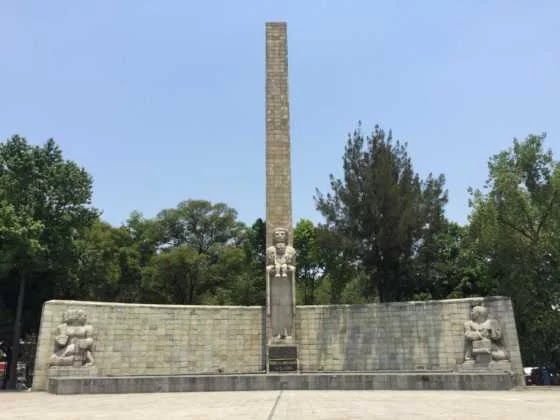
Monument to the Mother
photos by Carlos Tomasini
Thursday, December 14, 2017
Juan Sordo Madaleno
Happy Birthday Juan Sordo Madaleno!
Juan Sordo Madaleno was born in October 28, 1916, in Mexico City. He was an architect, influenced by Le Corbusier, working in the Bauhaus style. He worked with well known architects, Luis Barragan, Jose Villagran Garcia, etc. After establishing his own firm, Sordo Madaleno Arquitectos SC. Moral worked primarily on residential and hotel projects. His son, Javier Sordo Madaleno Bringas took over the family business in 1982.
Maqueta de la Iglesia San Ignacio de Loyola
Wednesday, December 13, 2017
Enrique del Moral
Happy Birthday Enrique del Moral!
Architect, Enrique del Moral, was born (an only child) in Irapuato, Guanajuato, on January 21, 1905. His parents relocated the family to Mexico City when he was just 4. He attended school there and entered the Academy of San Carlos with childhood friend, Juan O'Gorman, to study architecture. During the Mexican Revolution he lived for a time with relatives in Texas. Following his studies, Moral traveled extensively in Europe, familiarizing himself with the architectural styles there.
In the 30's, Moral set up his own architectural practice in addition to beginning a teaching career. He continued throughout his lifetime to explore contemporary architecture. Enrique del Moral was head of the most prominent contemporary architecture project: Ciudad Universitaria (pictured below). Over 70 professionals worked on the extensive endeavor.
Architect, Enrique del Moral, was born (an only child) in Irapuato, Guanajuato, on January 21, 1905. His parents relocated the family to Mexico City when he was just 4. He attended school there and entered the Academy of San Carlos with childhood friend, Juan O'Gorman, to study architecture. During the Mexican Revolution he lived for a time with relatives in Texas. Following his studies, Moral traveled extensively in Europe, familiarizing himself with the architectural styles there.
In the 30's, Moral set up his own architectural practice in addition to beginning a teaching career. He continued throughout his lifetime to explore contemporary architecture. Enrique del Moral was head of the most prominent contemporary architecture project: Ciudad Universitaria (pictured below). Over 70 professionals worked on the extensive endeavor.
Tuesday, December 12, 2017
Manuel Felguerez
Happy Birthday Manuel Felguerez!
Abstract artist, Manuel Felguerez, was born on December 12, 1928, in Zacatecas. His family relocated to Mexico City and although he did begin his studies at Academy of San Carlos, dissatisfied, he relocated to France, to further his art education there. He became an abstract artist, which was not accepted in Mexico at the time so his exhibits were limited. He was a member of the Generation de la Ruptura group who broke from the muralists in Mexico. After returning to Mexico he enrolled at La Esmeralda to learn about terracotta and later went back to France to study at Colarossi Academy, in Paris.
Felguerez' work is tied to his experiences with the artists he was associated with in Europe and the geometric-constructivist and abstract expressionist styles. In his paintings as well as sculpture, geometric shapes are fundamental. To him, "art is life".
With a wide educational experience, Felguerez has had a varied art career focused primarily on painting and sculpture. He has also worked as a professor, an anthropologist, taxidermist, and researcher. In 1998, he opened the Manuel Felguerez Abstract Art Museum in his hometown of Zacatecas. Married three times, Manuel Felguerez currently lives in Colorado and Mexico City with his current wife Mercedes Oteyza, where he continues to create.
Abstract artist, Manuel Felguerez, was born on December 12, 1928, in Zacatecas. His family relocated to Mexico City and although he did begin his studies at Academy of San Carlos, dissatisfied, he relocated to France, to further his art education there. He became an abstract artist, which was not accepted in Mexico at the time so his exhibits were limited. He was a member of the Generation de la Ruptura group who broke from the muralists in Mexico. After returning to Mexico he enrolled at La Esmeralda to learn about terracotta and later went back to France to study at Colarossi Academy, in Paris.
Felguerez' work is tied to his experiences with the artists he was associated with in Europe and the geometric-constructivist and abstract expressionist styles. In his paintings as well as sculpture, geometric shapes are fundamental. To him, "art is life".
With a wide educational experience, Felguerez has had a varied art career focused primarily on painting and sculpture. He has also worked as a professor, an anthropologist, taxidermist, and researcher. In 1998, he opened the Manuel Felguerez Abstract Art Museum in his hometown of Zacatecas. Married three times, Manuel Felguerez currently lives in Colorado and Mexico City with his current wife Mercedes Oteyza, where he continues to create.
Monday, December 11, 2017
Myra Landau
Happy Birthday Myra Landau!
Born on December 5, 1926, Myra Landau was from Bucharest, Romania, and has lived in several countries. When her family moved through Europe and finally arrived in Brazil (and later moved to Mexico), Landau began to experiment with painting. She began with figurative works but following a suggestion by her uncle, Marcel Janco, an artist credited with the founding of Dadaism, Landau moved toward abstract painting, where she found her niche. In addition to painting, Landau also worked with engraving in a series called Metal Relief.
Landau also has taught and worked in art research. She currently lives in Holland. She has had over 60 solo exhibits and over a hundred collective shows. Her work has been shown all over the world.
Born on December 5, 1926, Myra Landau was from Bucharest, Romania, and has lived in several countries. When her family moved through Europe and finally arrived in Brazil (and later moved to Mexico), Landau began to experiment with painting. She began with figurative works but following a suggestion by her uncle, Marcel Janco, an artist credited with the founding of Dadaism, Landau moved toward abstract painting, where she found her niche. In addition to painting, Landau also worked with engraving in a series called Metal Relief.
Landau also has taught and worked in art research. She currently lives in Holland. She has had over 60 solo exhibits and over a hundred collective shows. Her work has been shown all over the world.
Subscribe to:
Posts (Atom)